Jumat, 23 Maret 2012

Facebook buys IBM patents


Facebook confirmed Friday that it has added a trove of IBM patents to its arsenal on an increasingly lawsuit-strewn technology battlefield.
Reports that Facebook bought 750 software and networking patents from IBM surfaced less than two weeks after strugglingInternet pioneer Yahoo! accused the thriving young firm of infringing on 10 of its patents.
"I can confirm that there was a purchase but I don't have any other details to share," Facebook spokesman Larry Yu said in response to an AFP inquiry.

IBM would not comment.
Acquisition of the patents came as California-based Facebook prepared for an initial public offering and as Internet titans increasingly battle in courts as well as in marketplaces.
Yahoo!, in a lawsuit filed in US District Court for the Northern District of California on March 12, accused Facebook of infringing on patents in several areas including advertising, privacy and messaging.
The Sunnyvale, California-based company asked the court to order Facebook to halt its alleged patent-infringing activities and to assess unspecified damages.
Facebook, which was founded in 2004, a decade after Yahoo!, expressed disappointment with the move.
"We're disappointed that Yahoo!, a longtime business partner of Facebook and a company that has substantially benefited from its association with Facebook, has decided to resort to litigation," a Facebook spokeswoman said.
In the suit, Yahoo! said that Facebook's growth to more than 850 million users "has been based in large part on Facebook's use of Yahoo!'s patented technology."
"For much of the technology upon which Facebook is based, Yahoo! got there first and was therefore granted patents by the United States Patent Office to protect those innovations," Yahoo! said.
"Yahoo!'s patents relate to cutting edge innovations in online products, including in messaging, news feed generation, social commenting, advertising display, preventing click fraud and privacy controls."
Once seen as the Internet's leading light, Yahoo! has struggled in recent years to build a strongly profitable, growing business out of its huge Web presence and global audience.

Label:

Facebook takes steps to address privacy concerns


NEW YORK (AP) — Facebook has taken steps in recent days to address more worries about privacy, warning employers not to ask prospective employees for their passwords and trying to clarify its user "rights and responsibilities" policies.
But the latter effort backfired when tens of thousands of users, mostly in Germany, misunderstood the clarifications and blasted the company, even though nothing substantive had changed. Their discontent showed that, no matter what Facebook does, privacy concerns are still the biggest threat to users' trust and to its growth.

"There is such an incredible level of scrutiny now about anything any company does about privacy," said Jules Polonetsky, director of the Future of Privacy Forum, an industry-backed think tank in Washington. "We are treating every single thing that touches privacy as a five-alarm fire. The risk of all these five-alarm level outbursts is that people will become inured about privacy and miss realprivacy issues because of crying wolf when nothing is actually going on."
Users' willingness to share information is a key part of Facebook's business. The site makes the bulk of its money from ads that target users based on their personal information. Last year, the company earned a profit of $668 million and booked $3.7 billion of revenue, and it's preparing for an initial public offering later this spring that could be valued at as much as $100 billion.
Privacy issues have dogged Facebook for years. It settled with the Federal Trade Commission in November over allegations that it misled users about the handling of their personal information. Google Inc., a big rival, agreed to a similar settlement eight months earlier.
The latest ruckus happened when more than 30,000 German users posted that they were rejecting the company's proposed changes to its governing documents. But the changes amounted to nuanced revisions and clarifications of long-standing policies — not a major overhaul.
The company, for instance, replaced the word "profile" with "timeline," since Facebook users now have a different type of profile. Facebook also changed "hateful" to "hate speech" in its description of prohibited content.
Still, users who read the documents for the first time noticed some things that alarmed them. For example, the document replaced the words "privacy policy" with "data-use policy," seemingly taking privacy out of the picture.
Facebook has been calling it a data-use policy since September, preferring to be more straightforward about its actual purpose. But the company makes so many subtle changes that it's easy to lose track.
"It's clear that some people fundamentally misunderstand our proposed changes. Our data-use policy governs how we use and collect data. That document is not changing at this time," Facebook spokesman Barry Schnitt said. "That's why we have this unique and transparent process, though — so have an opportunity to clarify confusion and respond to user concerns. We look forward to doing so in the coming weeks."
Another worrisome discovery might have been the fact that applications used by your Facebook friends can gain access to your data on Facebook, even if you do not use the apps yourself. That's true, but it's been true since at least 2007 and well-documented elsewhere on the site.
The attention focused on Facebook's largely cosmetic changes reflect just how closely people watch the company.
"If they reposted the same privacy policy they had, everyone would be jumping up and down," said Polonetsky, a former chief privacy officer at AOL.
Sarah Downey, senior privacy strategist at an online privacy software provider called Abine, was among those criticizing Facebook this week. She said the company is being more straightforward about its business model and what it does by clarifying its documents. But that doesn't necessarily mean it's heading in the right direction.
"What we once thought of as a social network has really become an advertising network," she said.
On Friday, it was Facebook itself that raised alarms about privacy, warning employers not to ask job applicants for their passwords to the site so they can poke around on their profiles. The company threatened legal action against applications that violate its long-standing policy against sharing passwords.
The company action came after The Associated Press documented cases of job applicants who were asked, at the interview table, to reveal their Facebook passwords so their prospective employers can check their online profiles.
A Facebook executive cautioned that if an employer discovers that a job applicant is a member of a protected group, the employer may be vulnerable to claims of discrimination if it doesn't hire that person.
"As a user, you shouldn't be forced to share your private information and communications just to get a job," Erin Egan, Facebook's chief privacy officer of policy, wrote in a post. "And as the friend of a user, you shouldn't have to worry that your private information or communications will be revealed to someone you don't know and didn't intend to share with just because that user is looking for a job."
The post sparked comments from Facebook users, many of them thankful. But the number totaled only 108 — a sign that when it comes to online privacy, it's far easier to stir anger than gratitude.

Label:

Kamis, 22 Maret 2012

Sarkozy: Jail those who browse terror websites


PARIS (AP) — France's president proposed a sweeping new law Thursday that would see repeat visitors to extremist web sites put behind bars — one of several tough measures floated in the wake of a murderous shooting spree.
The proposed rules, unveiled by Nicolas Sarkozy after the death of an Islamist fanatic wanted for a horrifying series of execution-style murders, have alarmed journalists and legal experts, who say they risk pulling the plug on free expression.

Sarkozy, who is only a month away from an election, argued that it was time to treat those who browse extremist websites the same way as those who consume child pornography.
"Anyone who regularly consults Internet sites which promote terror or hatred or violence will be sentenced to prison," he told a campaign rally in Strasbourg, in eastern France. "Don't tell me it's not possible. What is possible for pedophiles should be possible for trainee terrorists and their supporters, too."
French law calls for up to two years in prison and €30,000 (roughly $40,000) in fines for repeat visitors to child porn sites, although whether the proposed anti-terror rules would carry similar penalities isn't clear.
When asked, Sarkozy's office directed a query seeking details to the Ministry of Justice, which didn't immediately offer clarification.
Journalists and lawyers are concerned.
"Trying to criminalize a visit — a simple visit — to a website, that's something that seems disproportionate," said Lucie Morillon, who runs the new media bureau of journalists' watchdog group Reporters Without Borders.
"What's especially worrying for us is how you are going to know who's looking at what site. Does this announcement mean the installation of a global Internet surveillance system in France?"
Media lawyer Christophe Bigot seconded her concerns, saying that any such law — if passed — would be a serious blow to the democratic credentials of a country that considers itself the home of human rights.
"I don't see how you can assume that a person who connects (to an extremist website) not only shares the ideas that are being expressed there but is ready to act on them," Bigot said. "That seems to be a very dangerous shortcut — a real step back in terms of individual liberty."


REUTERS/Jean-Paul Pelissier
Bigot said it wasn't clear to him to what degree Sarkozy's proposals were serious. In any case, France's Parliament isn't in session, but could be called back for urgent legislation. Otherwise, an eventual law would be contingent on Sarkozy's reelection.
The tightening presidential race has been upended by the shooting rampage blamed on Mohamed Merah, a 23-year-old Frenchman of Algerian descent who allegedly killed three French paratroopers, three Jewish schoolchildren and a rabbi before dying in a violent confrontation with police in the southern French city of Toulouse earlier Thursday.
Sarkozy has France's far-right nipping at his heels, so he's been under pressure to appear tough. A poll released Thursday by the CSA firm suggested that Sarkozy may benefit politically from a hardening of attitudes toward extremist violence.
Morillon said she understood the emotional appeal of a crackdown on online radicalization in the wake of such atrocities.
Still, she said, "you have to be careful not to attack the wrong target."
"Once more it's the Internet that's being blamed, as if the Internet was the source of all evil."

Label:

T-Mobile cutting a net 1,900 call-center jobs


BELLEVUE, Wash. (AP) — Cellphone carrier T-Mobile USA Inc.said Thursday that it is cutting 1,900 jobs nationwide as it consolidates its call centers in an effort to reduce costs and remain competitive.
Seven of its 24 call centers will be closed by the end of June. About 3,300 people work at the centers slated to be shuttered, but T-Mobile said it plans to hire up to 1,400 people at the remaining 17 centers.
The call centers slated for closure are in Allentown, Pa.; Fort Lauderdale, Fla.; Frisco, TexasBrownsville, TexasLenexa, KansasThornton, Colo. and Redmond, Ore.

The company said that workers whose jobs are eliminated will have a chance to transfer to the remaining call centers.
"These are not easy steps to take, but they are necessary to realize efficiency in order to invest for growth," Philipp Humm, T-Mobile CEO and president said in a statement.
T-Mobile, based in Bellevue, Wash., is the smallest of the four national carriers and is dealing with steep subscriber loses, resulting in fewer calls to its call centers.
In last year's fourth quarter, T-Mobile lost a net 802,000 subscribers on contract-based plans, which are the most lucrative. It is the only national carrier not offering the iPhone, the popular Apple Inc. device now carried by all three of the company's larger rivals.
In addition, a $39 billion bid by AT&T Corp. to take over T-Mobile was thwarted last year by antitrust concerns.
T-Mobile said it will restructure other parts of its business during the second quarter. That includes plans announced previously to modernize its network, add new technology and hire more sales staff. The company employs about 36,000 people.
It announced in February that it will revamp its wireless data network this year, making it compatible with iPhones and other smartphones.

Label:

Rabu, 21 Maret 2012

HP combines printer, PC units in turnaround effort


NEW YORK (AP) — Hewlett-Packard Co. is combining its printer and PC divisions as it tries to overcome dragging profits, growing competition and the lack of clear identity.
The move announced Wednesday will help the company streamline its business and save money to invest in growing areas. HP, a Silicon Valley pioneer, is hoping a renewed focus on innovation will re-establish the 73-year-old company as a technology trailblazer
"We have got to place a few bets where we can fundamentally change the name of the game," HP CEO Meg Whitman told shareholders Wednesday at the company's annual meeting in Santa Clara, Calif. The Associated Press monitored a webcast of the meeting.

Whitman said printing remains one of the areas where HP can still make its mark. First, though, she said the company needs to trim its expenses, describing the combination of the PC and printing division as a "perfect example" of her streamlining plans.
"We are going to have to save to get growth going again at HP," Whitman told shareholders.
Wednesday's restructuring is one of the first major steps that Whitman, formerly eBay Inc.'s chief, has taken since she took the top job at HP in September. Her predecessor, Leo Apotheker, had wanted to sell or spin off the PC business, a plan that contributed to his ouster after 11 months on the job. Under Whitman, HP decided to keep the unit after all.
The change comes as sales of printers and ink, once HP's lifeblood, are falling because people are sharing more documents and photos online instead of printing them.
HP, the world's No. 1 maker of personal computers, is also coping with declining PC sales as consumers in the U.S. and Western Europe delay replacing their machines and spend money instead on smartphones and tablet computers such as Apple's iPad.
Whitman inherited a faltering company that's facing growing competition from mobile devices and internal operational challenges such as a complex supply chain, which HP hopes to simplify by combining the divisions. While HP's revenue has been falling, the company's expenses have been rising — an imbalance that Whitman is scrambling to fix.
Echoing remarks that she made to analysts last month, Whitman told shareholders Wednesday that it may take several years to clean up the mess.
Investors already have been growing impatient as HP has been eclipsed by neighboring tech companies such as Apple Inc., whose founder, Steve Jobs, briefly worked at HP in the 1970s
One investor who addressed Whitman expressed his frustration over the divergent fortunes of Appleand HP. Apple's market value has soared by more than $500 billion during the past decade while HP's has climbed by about $10 billion.
Besides combining the PC and printing units, Whitman is unifying HPs marketing functions under one executive and consolidating other areas of its business. She told shareholders that the company can reduce its roughly $4 billion marketing budget without hurting the HP brand.
Whitman hopes to reduce the internal complexity that she believes is making the company slow to adapt to customer demands and changing technology. On Wednesday, the company stressed that the changes will mean a more streamlined, faster and consumer-focused Hewlett-Packard, one that fits its mantra, "One HP."
The company expects to increase productivity and efficiency in PCs and printing, while streamlining customer support and the company's supply chain.
Shaw Wu, senior technology analyst at Sterne Agee, said he believes there's room to cut expenses, particularly in administration and marketing.
But he warned that savings may be limited. Customers don't necessarily want to buy computers and printers at the same time. People replace PCs much quicker than printers, which can last five years or longer.
HP didn't say how much it will save or what effect the restructuring would have on jobs, but the move is likely to result in layoffs. In a 2009 shake-up of the printing, PC and other divisions, HP cut 4,400 jobs. The company had 349,600 workers as of October, the end of its most recent fiscal year.
Whitman will have plenty of choices as she decides where to invest the company's savings, said Forrester analyst Frank Gillett said. For one, HP has been investing in thinner, lighter laptop computers known as ultrabooks — devices that are easy to hold like tablets yet more powerful in sporting regular keyboards and the ability to run programs side by side on the same screen.
Gillett also believes there's room for innovation in printing as the way people use printers evolves. He said it'll help to have PC and printer product designers working together.
Though the market might be shrinking, he said, "it's hard to imagine in the next 10 years that we are going to get rid of large, cheap, disposable displays — i.e. paper."
The combined PC and printing unit will be led by Todd Bradley, 53, the executive vice president of the PC group since 2005. Vyomesh Joshi, the head of the printing group, is retiring after 31 years with HP, with a severance package of about $10.8 million, according to the company's regulatory filings. Joshi also is eligible for retirement benefits valued at nearly $7 million as of Oct. 31.
HP said the restructuring will help improve its branding, a challenge for a massive and storiedtechnology company with a role in everything from computers to consulting. Unlike, say, Apple or IBM Corp., HP lacks an identity that people can associate with it, Wu said.
Ultimately, HP will have to define the "big picture" of what the company stands for, Wu said. "What is HP?"
Whitman offered this definition at Wednesday's annual meeting: "HP is the world's largest provider of information technology infrastructure, software, services and solutions to individuals and corporations of all sizes. It's simple, it's clear and it doesn't need a lot of explanation."
Toward the end of the meeting, Whitman discovered she had gotten a part of HP's identity wrong. In her prepared remarks, Whitman said the company would be celebrating its 70th anniversary in 2014. A shareholder corrected her during the question-and-answer session, reminding her that HP started in a Palo Alto, Calif. garage in 1939, which would make the company 75-years-old in 2014.
HP, which is still based in Palo Alto, had briefly combined the PC and printing business businesses before, under the leadership of Carly Fiorina. Mark Hurd reversed that when he took over as CEO in 2005, when the printer division was still thriving.
The printing and PC units together made up about half of HP's $30 billion revenue in the November-January quarter.
HP's stock fell 52 cents, or 2.2 percent, to close at $23.46 on Wednesday.

Label:

Selasa, 20 Maret 2012

Can Android spark new life for the point-and-shoot camera?


The digital photography industry has been experiencing some change – that’s probably the nicest way to say it. The smartphone camera and the rise of third-gen cameras have squeezed this industry into a rather uncomfortable position, and adapting is proving more difficult than anyone expected.
Of course, the fact that traditional digital photography is feeling some pain at the hands of the mobile market isn’t entirely because of 
smartphones’ increasingly competent cameras. It’s the entire OS setup and app ecosystem that are such a threat. The smartphone camera has come to mean more options and outlets for people who probably only used to take red-eye out of pictures. Now, you can instantly airbrush anyone, alter saturation, crop, throw in filters, create panoramas… these are only the most basic things you can do with some of the thousands of photo apps available.
Couple this with the ability to instantly post and share images, and camera makers are starting to sit up and take notice. Probably not as quickly as they should, however. Wi-Fi enabled cameras are only now hitting the mainstream, but that lone smartphone feature probably isn’t going to be good enough. Consumers want total convenience in all-in-one packages. Now it could very well be time to revisit camera firmware altogether.
The rise of the Android-powered camera?
It was recently revealed that Samsung and Panasonic are both investigating creating Android-powered digital cameras. They join Polaroid, which beat everyone to the punch with its SC1630 Smart Camera, what is arguably the first and biggest step toward phone-camera unity. We’ve been hounding Polaroid for some answers (and testing time) with the Android-based device, but the company has been quiet since CES. For good reason: the SC1630 Smart Camera is a hybrid if there’s ever been one, and hybrids come with complications (more on that in a minute).
“It is a clever end-around on the camera market,” says photographer Trey Ratcliff, who has predicted the coming end of DSLRs. “If those old Japanese-UI-masochists at Nikon, Canon, and Sony don’t watch out with their closed systems, the world of apps and innovation will crash their party.” Those names do have a strangle-hold over the camera industry, but that doesn’t mean they won’t get their come-uppance: Consumers are increasingly at ease with smartphones. The learning curve is shallow and they are built for constant and far-reaching usability.
Cameras on the other hand… have gotten better. And I am a stalwart defender of the digital camera – I in no way want to see the smartphone whittle away at this industry. But the industry took too long to adopt easy-to-master UIs for a wide range of camera users, and in the meantime we all become incredibly familiar with mobile OS navigation.
It’s difficult to say this, but Android-powered cameras make sense, most significantly applied to point and shoots. The mobile OS has become the interface of the people. Not only would Android-powered cameras open up a world of connected possibilities, they would open access to the apps our digital experience is very, very entrenched in.
It also creates potential to grow and specialize in the app-developer community. “It would be great to have a camera with Wi-Fi and an app ecosystem,” says Urban Airship CEO Scott Kveton (who tells me that while he owns a Canon 40D, his iPhone 4S is his “juggernaut”). “As an app developer, you could develop for the inherent nature of that device.”
“The key is going to be camera manufacturers and how they fill the ecosystem, because it’s really far from what they are doing right now,” he says.
The complications of connectivity
Adopting Android won’t come easily. Polaroid was likely quiet about the SC1630 at CES partially because the device’s label and launch details are up in the air. At the time, it wasn’t made explicitly clear whether the SC1630 had 3G phone capabilities (it does) and carrier affiliations hadn’t been released (as they still have not). Camera manufacturers would have to start looking into the mess that is data plans and carriers if it were going to make a real go at this. Not to mention the technical task of reassessing what the inner hardware would look like.
Promisingly, however, the SC1630 has been able to generate a healthy amount of interest despite how hushed Polaroid has been, and the lack of solid launch date and availability. Samsung executives were recently quoted by DPreview saying “once the cloud computing era truly dawns, a non-connected device will be meaningless. In that case, the camera will need real-time connectivity, and [carriers] are looking for devices like this.” So dealing with all the fine print is very likely going to be worth it for digital camera companies.
Because if they don’t do it, smartphone makers will. “Nokia just introduced a camera… that’s a phone,” says Kveton, referencing the 808 PureView phone with its 41-megapixel camera. It’s hardly the only company pumping up its image capture specs either. But I’m of the belief that names like Canon, Nikon, Olympus, Samsung, Panasonic, and Sony could (and should) do it better. Unfortunately these are old, old companies with deep roots, and change won’t necessarily come easy.

Label:

Senin, 19 Maret 2012

NetZero to launch free wireless broadband service


NEW YORK (AP) — It's like the '90s never left: Billy Crystal hosted the Oscars. Internet IPOs are back. And NetZero is returning with free Internet service —only this time it's wireless.
United Online Inc. announced Monday that it will offer freewireless Internet service under its NetZero brand, the one that started the free dial-up phenomenon in 1998. The company is backing up the plan with TV, print and online advertisements.

There are plenty of catches with the free plan. United Online isn't offsetting its costs by making users look at advertising, as it did with its original offer of free dial-up Internet access. The "free" users will be money-losers for the company, United Online Chairman and CEO Mark Goldston said. That means United Online is using the free plan as a way to lure customers with the hope of upselling them to paying plans, which start at $9.95 per month.
To take advantage of the offer, consumers will need to buy a $50 antenna stick that plugs into a laptop, or a $100 "mobile hotspot" that allows any Wi-Fi equipped device to connect to the Internet. United Online will be selling the devices on the NetZero website.
The free accounts are limited to 200 megabytes of data per month— enough for some email and Web surfing, but little else. Half an hour of full-screen streamed video will eat up the whole month's allotment. By comparison, AT&T Inc.'s cheapest wireless data plan costs $14.95 per month for slightly more data — 250 megabytes per month — but that plan is only available for tablets with built-in cellular modems.
When the monthly traffic allotment is exhausted, NetZero cuts off Internet access until the start of the next month, and users are prompted to upgrade to the paid plan.
NetZero will only let users ride free for a year. If they switch to a paid plan, they won't be able switch back to the free one.
The $9.95 plan will provide 500 megabytes of traffic for a month. For $50 per month, subscribers get 4 gigabytes of data per month. That's enough for some video watching, but not enough to replace a household's cable or DSL modem. A Verizon Wireless plan that's contract-free, like NetZero's, provides 1 gigabyte for the same price.
United Online doesn't have a wireless broadband network of its own. Instead, it's renting capacity onClearwire Corp.'s network. It's the same network used by Sprint Nextel Corp. to provide "Sprint 4G" data service. Several cable companies, including Comcast Corp., also resold access to Clearwire's network under their own brand. However, they've pulled out of that deal to focus on a partnership with Verizon Wireless.
Clearwire's network has a few problems: it's based on a broadband technology that the rest of the industry has bypassed, which means the selection of compatible devices is limited. Because of the frequency it uses, the signal has difficulty penetrating into buildings. Both Sprint and the cable companies used Sprint's slower cellular data network as a fallback option, but NetZero's devices rely only on Clearwire, which means coverage at decent signal strength may be spotty.
Clearwire has stopped investing in this network and is instead raising money for a new network that uses the industry-standard "LTE" technology.
According to Clearwire's financial statements, it received an average of $6.34 per month in the fourth quarter for each wholesale subscriber, most of whom are "Sprint 4G" smartphone users.
United Online, which is based in Woodland Hills, Calif., has about 750,000 dial-up subscribers left, Goldston said. Internet service is a minor part of its overall business: it makes more from owning flower-delivery service FTD and "online nostalgia services" like Classmates.com.

Label:

India to start work on stalled nuclear plant


The southern Indian state of Tamil Nadu on Monday gave the green light for work to start on a massive nuclear power stationstalled for months amid protests over safety concerns, a report said.
Tamil Nadu's chief minister announced the decision to begin work on two 1000-megawatt nuclear reactors in Koodankulam with Russian help following an approval by the state cabinet, the Press Trust of India (PTI) said.

"In accordance with the cabinet decision, immediate steps will be taken (to start the commissioning) of the plant," PTI quoted Chief Minister Jayalalithaa, who uses only one name, as saying in a statement.
Work on the project was stalled last September following mass protests by villagers and activists over safety concerns.
Jayalalithaa urged political parties and protesters not to disrupt the project, which will tackle the state's severe power shortages.
Russian Ambassador to India Alexander Kadakin last month voiced his country's frustration over the delays.
"We cannot allow our scientists to remain idle endlessly. For months together, they are without work," Kadakin said.
Other protests have also thrown into disarray plans to build a power plant in the western state of Maharashtra.
India last month froze the assets of three non-profit groups it alleged were diverting foreign aid funds to fuel the anti-nuclear protests.
Nuclear energy has been a priority for India since 2008 when then US president George W. Bush signed into law a deal with New Delhi that ended a three-decade ban on US nuclear trade with the country.
Since then, France, Russia and private US and Japanese firms have been locked in fierce competition to sell new reactors to India.

Label:

Kamis, 15 Maret 2012

Heavy demand expected as iPad goes on sale Friday

NEW YORK (AP) — Let the wild rumpus start.
The customary storefront crowds are expected to gather as Apple's latest iPad goes on sale Friday. Long lines are likely even though customers could have ordered the new tablet computer ahead of time for first-day home delivery.
The third version of Apple's iPad will be available in the U.S. and nine other countries beginning at 8 a.m. local time. The new model comes with a faster processor and a much sharper screen. It also boasts an improved camera, similar to that of the latest iPhone.
For many customers, visiting a store in person — instead of having one shipped — offers consumers a chance to mingle with die-hard Apple fans.

Two years after the debut of the first iPad, the device's launch has become the second-biggest "gadget event" of the year, after the annual iPhone release. A year ago, thousands lined up outside the flagship Apple store on New York's Fifth Avenue. The device sold out on launch day, even though it didn't go on sale until 5 p.m.
Apple does its part to encourage a party atmosphere. In past years, the company's retail employees have provided bottled water, coffee, bagels and even cupcakes to people in line. They've cheered and clapped as customers entered and left. Some customers bring lawn chairs and sleeping bags. Others dress as iPhones and iPads.
Although Apple's product releases have become a cultural phenomenon, the cult-like crowds that line up outside of its stores have made the company vulnerable to gentle ribbing from its competitors.
Television ads for Samsung's Galaxy line of phones routinely poke fun at people who are camped out in line for what appears to be an Apple product release.
The spots, in heavy rotation since December, portray Apple fans as clueless drones who think they're too cool to buy gadgets made by companies other than Apple. In one of the commercials, a bearded hipster says he could never buy a Samsung phone because he's "creative." A bystander observes: "Dude, you're a barista."
For some customers, standing in line will offer the only chance to get a new iPad on Friday. Apple quickly ran out of supplies it set aside for advance orders. The company was telling customers Thursday to expect a two- to three-week wait for orders placed through its online stores.
The new iPad is called just that: "the new iPad." Apple declined to give it a name like "iPad 3" or "iPad HD." That is consistent with its naming practice for iPods, MacBooks and iMacs, but a break with the way iPhone models are named.
In the U.S., the new iPad starts at $499, the same as the previous model, the iPad 2, when it debuted a year ago. The iPad 2 remains in stock, for $100 less.
Despite competition from cheaper tablet computers such as Amazon.com Inc.'s Kindle Fire, the iPad remains the most popular tablet computer. Apple has sold more than 55 million iPads since its debut in 2010, including some 40 million last year. Researchers estimate that the iPad has more than 60 percent of the market for tablets.
The iPad's accomplishments have contributed to the company's success on Wall Street. Apple's stock touched $600 briefly for the first time on Thursday. Apple is the world's most valuable company, with a market capitalization of nearly $555 billion. It topped $500 billion for the first time in late February, a market value peak where few companies have ventured.
Apple's retail stores are likely to draw the biggest crowds because they usually have the largest launch-day supplies, but the tablet will also be sold at Best Buy, Radio Shack, Sam's Club, Target and Walmart.
AT&T and Verizon Wireless will also sell iPads, but only models with built-in cellular broadband modems. Those models use the companies' latest high-speed wireless networks, based on so-called "4G LTE" technology. They'll be the first Apple devices with that capability built in.
The cellular-capable models cost $130 more than Wi-Fi-only versions. There's a separate monthly data fee, but none of the long-term contract requirements typical with phones. The priciest iPad goes for $829; it comes with cellular access and four times the storage capacity of the basic, $499 model.
Apart from the U.S., Puerto Rico and the U.S. Virgin Islands, the device goes on sale the same day in Australia, Canada, France, Germany, Hong Kong, Japan, Singapore, Switzerland and the United Kingdom.
A week later, another 25 countries will get the device, altogether making for an unusually fast product roll-out for Apple.

Label:

Rabu, 14 Maret 2012

China's new microblogging rules to make Weibo more attractive

SHANGHAI (Reuters) - New real-identity rules to be imposed on China's Weibo are likely to make the country's most popular microblogging platform more alluring to advertisers, as Sina Corp seeks to start generating revenue from its product later this year.
On Friday, Beijing-based users on Weibo will need to be registered with their real identities in order to post online. Other major cities, such as Shanghai and Guangzhou, are expected to adopt similar rules.

Analysts said the move was unlikely to cause a steep drop in user engagement and may actually see an up tick in advertiser interest, as the identity rules would weed out spam accounts and give Sina precious user information that could turn the platform into a money-spinning crown jewel.
"It's not going to have a major impact on user engagement because there's nothing else that does what this platform does in real time," said Shanghai-based marketing consultant T.R. Harrington.
"From an advertising targeting perspective Weibo has the potential to become much more valuable," Harrington said.
Weibo, dubbed the Twitter of China, allows users to post short messages, gather fans and follow other users. It is valued up to $4.5 billion by analysts, compared to Twitter that is valued at $8 billion based on its latest round of financing.
China's online advertising market rose 57 percent to 51.2 billion yuan ($8.1 billion) last year, surpassing traditional newspaper advertising, according to Beijing-based consultancy iResearch.
Sina was the fourth-largest advertising platform after Baidu Inc, Google China and Taobao.
TARGET ADVERTISING
The new regulations, which require users to pass personal information to Sina, could empower the firm to target users with advertising and to collect useful data on them, analysts said.
Sina on Monday estimated that 60 percent of its 300 million users of Weibo users would have registered their real identities by the deadline.
Harrington said he estimates that new rules could see a pent up demand for big brands to advertise on Weibo.
"If I could tell all my customers tomorrow that they could buy their brand keywords on Weibo, they will buy them immediately," he said.
Chief Executive Charles Chao said in an earnings call last month he expects to start monetizing Weibo effectively in the second half of the year through advertising.
The real-identity rules would also make it harder for spam accounts to operate. Chao told local media late last year that Sina recently removed tens of millions of spam accounts.
When the real-identity rules were announced by the Beijing city government on December 16, Sina shares plunged to its lowest in 15 months on concern that the rules would neuter discussion and engagement on the lively platform.
The company said during the earnings call that the rules would have a negative impact on user engagement but analysts said the rules would not affect the platform's popularity in the medium to long term.
"I would expect it to trend down just a little bit but probably not dramatically," said Michael Clendenin of RedTech Advisors.
China has repeatedly criticised microblogs for spreading what it calls unfounded rumors and blocks social networking sites such as Twitter and Facebook, citing the need to maintain social stability.
"The vast majority of users are not publishing sensitive information, they are using it as a documentation of their daily lives," said Sam Flemming, founder of Shanghai-based social media consultancy CIC.
"I don't see that this would really impact their use of the platform," Flemming said.
($1 = 6.3265 Chinese yuan)
(Editing by Kazunori Takada and Michael Perry)

Label:

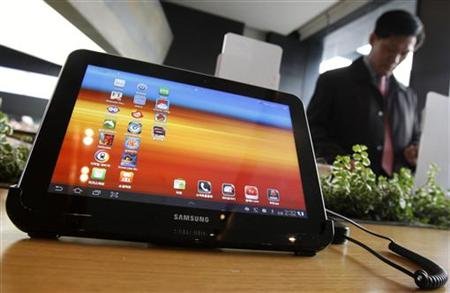
Samsung losses bid to ban iPhone, iPad sales in Netherlands

SEOUL (Reuters) - Samsung Electronics Co <005930.KS> said on Thursday a Dutch court rejected its 3G patent bid to ban sales of Apple's iPhone and iPad in the Netherlands.
But Samsung said the court ruled that it could seek damages over the use of Intel chips, giving the South Korean firm a partial victory in the latest skirmish between the world's biggest smartphone makers.
Samsung and Apple are locked in escalating global patent battle, as they jostle for the top position in the booming smartphone and tablet markets.

Apple first the fired salvo in April 2011, arguing Samsung had "slavishly" copied its iPad and iPhone and since then both have taken legal action against each other in several countries claiming patent infringements.
Samsung supplies mobile processors to power iPad and iPhone and counts Apple as its biggest customer.
The Hague court ruled on Wednesday that Samsung cannot assert 3G patents against Apple products using Qualcomm's baseband chips, as Samsung has a licensing deal with the U.S. chipmaker.
But the court ruled that Samsung can claim such rights against products that use Intel chips, according to Samsung.
"(The) ruling by the Hague court provides Samsung with a legal basis to move forward with the protection of our patent rights," the South Korean firm said in a statement.
"Samsung has and will continue to stand ready to meet its obligations in licensing its technology on fair and reasonable terms."
The Dutch ruling comes as Apple returned to Samsung for the initial supply of touch-screen panels to make its latest iPad, which was unveiled last week and will hit store shelves on Friday, deepening their business ties, according to industry sources.
(Reporting by Miyoung Kim; Editing by Michael Perry)

Label:

Selasa, 13 Maret 2012

Demand for iPad, rivals leads IDC to up forecast

NEW YORK (AP) — Thanks to strong demand for Apple's iPad and competing devices such as Amazon's Kindle Fire, worldwide shipments of tablet computers are likely to grow faster than expected this year, according to a newly revised forecast from a leading market-research group.
IDC said shipments in the last three months of 2011 were higher than expected. As a result, the research group now projects shipments of 106 million in 2012, up from its previous forecast of nearly 88 million.
The new figure, out Tuesday, represents a 54 percent increase from the nearly 69 million devices shipped in 2011.
Since the iPad's debut in 2010, millions of people have flocked to these easy-to-use, easy-to-carry devices to watch movies, play games and catch up on the latest news and books.

Many businesses have also embraced them. Some airline pilots, for instance, are ditching heavy flight manuals for iPads to make planes lighter and save fuel. Schools are also starting to replace paper textbooks with electronic versions on tablets. Election workers in Oregon used iPads to help the disabled vote.
The rise of tablet computers comes at a time when sales of traditional personal computers are slowing, particularly among consumers in the U.S. and other industrialized countries. Another research group, Gartner, has forecast that PC shipments will grow at a relatively weak 4 percent this year as products fail to excite consumers the way tablets have.
People and businesses are still buying PCs, which can run multiple programs side by side on the same screen and have keyboards more suited for extensive typing than on-screen ones available for tablets. Gartner expects shipments of nearly 370 million PCs this year, about 3.5 times what IDC projects for tablets.
But traditional PC makers have sparked much of their growth by turning to emerging markets. In industrialized markets, there's evidence that people are delaying replacements for their years-old PCs and buying tablets instead.
"Frankly, most are just waiting for a compelling reason to upgrade," said Tom Mainelli, IDC's research director for mobile connected devices.
That reason could come late this year when Microsoft releases a new version of Windows designed to support PCs and tablets. Successful PCs running Windows 8 will likely mimic tablets with slim designs, longer battery life and the ability to turn on instantly, Mainelli said.
Those qualities helped Apple dominate a market it helped create.
Apple sold more than 40 million iPads last year, including 15 million in the holiday quarter. High demand is expected when a third version, with a sharper screen and a faster processing chip, goes on sale Friday. Apple already has stopped taking advance orders for Friday and said customers should expect a two- to three-week wait for purchases made Tuesday through its online store.
Although some researchers estimate that Apple has more than 60 percent of the market for tablet computers, rivals have done well.
The Kindle Fire came out in November with a lower price tag — $199, compared with $499 and up for the iPad at the time. The Fire has a smaller screen and fewer features, but it's good enough for many consumers. IDC estimates that Amazon.com Inc. shipped 4.7 million Kindle Fires by year's end (Amazon does not release figures).
Mainelli said he initially expected the Fire, which runs on a modified version of Google's Android system, to take sales away from other Android tablets. Instead, the Fire's success may have helped other Android products, too, including Samsung Electronics Co.'s Galaxy devices and Barnes & Noble Inc.'s Nook Tablet.
"It seems all the attention that the Fire launch garnered raised awareness of media tablets in general, and a great number of vendors benefited from this increased awareness," he said.
The 68.7 million tablets shipped in 2011 represents a 9 percent increase from IDC's forecast of 63.3 million and is about 3.5 times the 19.4 million shipped in 2010. IDC says 28.2 million tablet computers were shipped in the final three months of 2011, about 2.5 times more than a year earlier.

Label: